Search This Blog

Showing posts with label Medieval History. Show all posts

Tuesday, April 3, 2018

The Dragon

It is an ancient and diverse, yet complex tradition among the many dragon legends and recounts that have been written down over the last few hundred years. Even today, the dragon might be the most well-known and renowoned fantasy creature of them all, regardless if one chooses to  embrace the world of fantasy or not.  Whether it be George R.R. Martins Game of Thrones, Tolkiens's The Hobitt, Astrid Lindgrens The Brothers Lionheart or Walt Disney's Sleeping Beauty.   


However; without the belief that there was such a terrible supernatural being in concrete and tangible sense, this tradition would hardly have survived for so long.

Let's turn the clock, a few years back time. 

December 1240:
King Haakon Haakonsson proclaims seeing a big star with long tail. He calls upon Master Wilhelm and says,

"God help us, this star is called cometa, and denotes either a lord's death, a shed of blood or other plagues to come."
The King's vision was not an isolated event; descriptions such as these constitute several "omens" which throughout the ages have manifested in the sky above. Today we might identify them as comets or shooting stars, lightning or fireballs. In the minds of the folk in the Middle Ages however, these celestial phenomena were concieved as tangible evidence that a fiery creature, swooping rampant across the sky, really did exist. In Mo i Rana in Northern Norway, as late as in 1870, it was said:
On moonlit evenings, small flames of fire sometimes appear across the sky, moving through the air with great speed, with the shape of a broomstick. They are believed to be living beings, called dragons, possessing the ability to breathe fire, casting its flames on men.
In the folk belief, the dragon was a snake-like, fire-breathing monster with a long tail, a horses' mane, and wings and claws on hands and feet. It could not bear the light of day, and was most likely to be seen at dusk, dark as night, spewing fire as it flew from mountain to mountain. When the dragon appeared, it was normally a token that something bad was in store - an accident, fire, war, famine, disease, death; for the ungodly, it was a reminder to be aware. 

The Dragon Awakes
Theodor Kittelsen (1903)
Neither prehistoric giant lizards or physical celestial bodies can fully explain the origin of the dragon. Today, it is believed that the answer might be found in ancient serpent myths, because the dragon was primarily conceived as a worm with roughly the same characteristics. The animal's Greek name dracon (Latin: Draco) is really a term for snake.

Primarely, this creature symbolizes the evil and dark forces of the world, emerging as the enemy of gods and mankind. The Old Testament recounts the tale of Leviathan, a seven headed sea monster which God himself breaks to pieces, and in an apocryphal addition to the book of Daniel, the prophet took the life of a great dragon revered by the Babylonian kings. 

Destruction of Leviathan
Gustave Doré (1865)

Through accounts such as these, the dragon gained influence in several legends about saints in Christian times. However, the greatest impact is to be found in John's revelation, were the creature appears as God's adversary and a symbol of Satan, "the old snake":

And there appeared another wonder in Heaven; and behold a great red dragon, having seven heads and ten horns, and seven crowns upon his heads. [...] And his tail drew the third part of the stars of heaven, and did cast them to the earth.
And there was war in heaven: Michael and his angels fought against the dragon; and the dragon fought and his angels, And prevailed not; neither was their place found any more in heaven.
And the great dragon was cast out, that old serpent, called the Devil, and Satan, which deceiveth the whole world: he was cast out into the earth, and his angels were cast out with him. (12: 3, 4, 7, 8, 9)

That beging said, notions of a giant serpent or dragon was found in the ancient oriental culture long before the Christian era began.  The Babylonian creation myth Enuma Elish, tells the tale of how the Babylonian national god Marduk defeated Tiamat, the dragon of the primordial sea, and saved the realm of gods of armagaddon. The Greek serpent god Typhon had a hundred dragon heads with fiery eyes and a fearsome voice. But Zeus killed him with a thunderbolt and buried him under a volcanic mountain. 

In the Old Norse poem Völuspá (Eng. "the prophecy of the Volva"), the dragon Nidhogg is referred to as a dreki. Volva warns Odin that Nidhogg, and thus Ragnarok, approaches, and when it comes about, Nidhogg comes flying down from the mountains, with the corpses of men between its feathers:
Þar kemr inn dimmi dreki fljúgandi,
naðr fránn, neðan frá Niðafjöllum;
berr sér í fjöðrum, - flýgr völl yfir, -
Niðhöggr nái. Nú mun hon sökkvask.
[From below the dragon | dark comes forth,
Nidhogg flying | from the misty mountains;
Buried, within his feathers | the corpses of men
- flies over the earth -
The serpent bright | now she will sink (disappear).
]

A natural consequence of the belief of such creatures, is that there will always be someone bold enough to confront them. The most famous dragon slayer among saints is St. Georg (in the Nordic lands, also called St. Jorgen). He was an officer in the Roman army, but because he was a Christian, he refused to join the Emperor Diokletioans Christian persecutions. After fierce tortures he was beheaded in Palestine in the year 303, later becaming one of the most venerated saints in Christianity, especially by the Crusaders. The legend tells that the dragon Georg defeated, took abode in Libya and daily demanded a young virgin victim. Finally, there was only one left - the king's own daughter. She was set to die when Georg came riding past and killed the dragon with his lance. but believing in his Christian chastity ideal, he denied the princess's hand and went on his way.
 

Outside, there was a giant dragon fast asleep...
Theodor Kittelsen, 1900
In the Norse countries however, St. Georg lost the competition with another dragon slayer, who spoke more to the ancient Norsemens' thoughts and feelings; the Germanic hero Sigurd. The story is, as with many of the ancient sagas, really quite cruel - which maybe the main reason why it became so popular.

The dragon Fafnir in which takes center stage, was originally a dwarf, yet was transformed  by the ring called Andvarenaut, initially belonging to the dwarf Andvare. 

Andvare was killed by Loki and the treasure was appropriated by the dwarf Hreidmar. But the ring was cursed, and Hreidmar was killed by his son, Fafnir. When Fafnir took the ring for his own, he was transformed into a greedy dragon who guarded his treasure in solitude. However, Sigurd killed Fafnir with his sword Gram ("Gram" meaning wrath). The sword was originally broken in two, but the master blacksmith Regin reforged the sword, and convinced Sigurd to kill Fafnir and retrieve the treasure. And so Sigurd took his sword and went up to Gnitahei, Fafnir's lair, stabbed the creature in the heart, thus earning him the epithet Fafnirsbane.

For thousands of years, the dragon kept watch over the golden treasure. With its wings, the royal crowns and gems and chests full of shining rings, were kept safe…
Theodor Kittelsen, Kisteguld, 1892
Such treasure-guarding monstrosities are featured in both oriental and ancient sources. The same can be said about the origins of the flying dragon. The Roman poet Ovid (43 BC - about 18 AD.) wrote about winged dragons pulling Medeas chariot across the sky. And in the Old English epic poem Beowulf from the 700s, the prelude recount that a slave discovered the guarded treasure and stole a golden cup. When the dragon sees that the cup has been stolen, it leaves its cave in a rage, burning everything in sight. 

Like one think of the medieval shielded dragons...  

The dragon has also had a strong and concrete symbolic value in folk art and religious imagery. The dragons were the designation of large long ships equipped with animal-like heads in the front row. The dragons were generally the largest ships in the fleet, usually the ship of a king or a chieftain. Snorri Sturlason's kings' sagas refer to several ships as "dragons". It therefore appears that the term "dragon" could be used in several of the long ship types if the ship was equipped with dragon head. Most famous of these is undoubtedly Ormen Lange (The Long Serpent), the Norwegian equal to the HMS Victory in the UK and Vasa in Sweden. It was built for the Norwegian King Olav Tryggvason, and was the largest and most powerful longship of its day.


Halfdan Egedius, Illustration for Olav Trygvasons saga. Snorre 1899-edition
Nasjonalmuseet, The Fine Art Collections

Stave churches appear to sometimes to have built upon or used materials from old pagan worship sites and are considered to be the best evidence for the existence of Norse Pagan temples and the best guide as to what they looked like. The inclusion of dragon heads and other mythological symbolism suggests a cultural synthesis of Norse mythological beliefs and Christianity.


The Norwegian art historian Lorentz Dietrichson (1834-1917) wrote in 1892

As you travel up in Norway's mountainous countryside, you still meet church buildings with amazing shapes, which look rather like demonic idols, than God's house, with its pulled-out gables that rise one above the other with its steep ceilings and low walls - like one think of the medieval shielded dragons - these are the Norwegian stave churches.
Dragon motif, the stave church of Hopperstad
Photo: Nina Aldin Thune, Ceative Commons

Did you know?


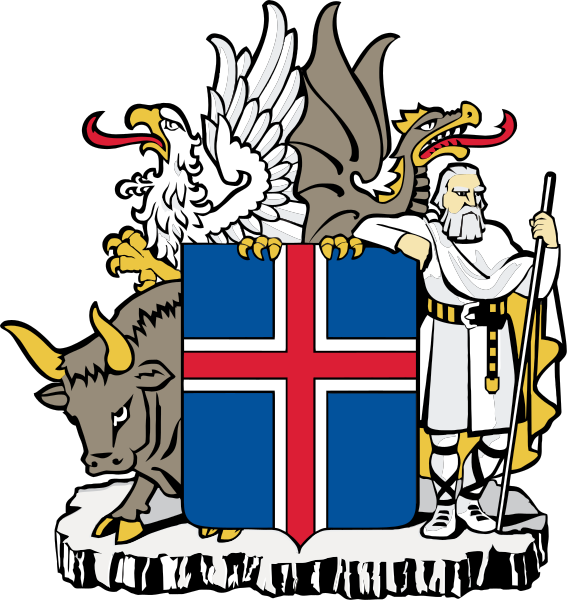
The Icelandic coats of arm: the dragon (Dreki) protects the southeastern part, and the rock-giant (Bergrisi) is the protector of southwestern Iceland. Great respect was given to these creatures of Iceland, so much that there was a law during the time of the Vikings that no ship should bear grimacing symbols (most often dragonheads on the bow of the ship) when approaching Iceland. This was so the protectors would not be provoked unnecessarily.

Sources:

Tuesday, October 4, 2016

From Odin to Jesus: the Story of the Saintly King Olaf, and the Christianization of Norway


Gerhard Munthe, Illustration for Olaf's saga, Heimskringla, 1899-edition
Olaf II Haraldsson, the saintly king who fell at the battle of Stiklestad in 1030 and canonized the year after, quickly became a legend in the making, much due to the writings of Snorri Sturluson. Growing up I, as many others, came to know Olaf as the driving force behind the Christianization of Norway, and as Rex Perpetuus Norvegiae – the Eternal King of Norway. But who in fact was Olaf II Haraldsson?

The story goes that Olaf already at 12 years of age went to sea, and raided with the Vikings. During the winter of 1013/1014, Olaf had a longer stay in Rouen in Normandy, where he was the guest of Duke Richard II. The Normans were descendants of Norwegian and Danish Vikings, and had converted to the Christian faith, feeling very strongly for this new way of life. Spending much time with the Duke, Olaf learned about Christianity and was eventually brought to the cathedral.


There are many reasons for why Olaf during this period decided to converse to the Christian faith, and letting himself be baptized. One of them must undoubtedly have been the splendor of the cathedral in Rouen, the incense and the Gregorian chant, which together may have given Olaf a spiritual experience as so many others before him. The Christian outlook on life after death might also help to explain this transition, in which many of his men joined in. 


The nave of Rouen Cathedral, France

In addition, Olaf was very much inspired by the stories of Charlemagne, giving him the vision of a strong, unified Norway founded on the implementation of the Christian faith.

The advent of the Christian law however, was not unproblematic to say the least. Implying an evident break with longstanding traditions, the social consequences quite often emerged as prohibitive and out of the question. A man for instance, who was married to several women, now had to send away one or several wives, slave owners had to see that their slaves were redeemed and set free, no work was to be conducted on Sundays or during holidays implemented by the church, and so on and so on. In cases of people openly opposing the Christian injunctions, Olaf was unalterable – despite was met with heavy threats of violence. These threats, orchestrated in order to enforce the law seem on one hand to have had an effect; nevertheless, they ultimately contributed to his downfall. On July 29th 1030, 35 years of age, Olaf II Haraldsson died at the battle of Stiklestad after several noblemen had turned against him.


Peter Nicolai Arbo. Olav den Helliges fall på Stiklestad (The fall of Olaf in the battle of Stiklestad), watercolor painting, probably from 1859

According to Passio Olavi (Eng. "the Passion and miracles of the Blessed Olaf"), Olav's body shortly after was placed in a shed, where a blind man received his sight again as he rubbed his eyes with water which Olaf had been washed in. The body was eventually buried in a sandbank by the river Nidelva, and when the coffin was dug up a year after it was claimed that Olaf’s nails, hair and beard had continued to grow. On this basis, Olaf was declared a saint, and the cult of St. Olav spread rapidly throughout Northern Europe. Churches in honor of St. Olav's was built not only in Scandinavia, but also in major cities such as Novgorod, London and York.


Beside Virgin Mary, Olaf II Haraldsson became the most often depicted saint in Nordic Medieval art, both in painting and sculpture. From the 1100s and up until the Reformation, the saintly king is displayed either standing up, crowned and with an ax in one hand, or sitting down, often with a monster underneath his feet - the symbol of the evil forces he overcame. 


Olaf’s well

Olavskilden (Olaf's well), April 2008. Photo: Kristian Hunskaar, creative commons

“Olaf's well” is a small freshwater spring on top of Hammer mountain, a forested crag in municipality of Lørenskog in the south-eastern Norway. Located right nearby the local church, which dates back to the 12th or 13th century, the well is 8.7 meters long, and around 3 meters at its widest. It is renowned for never drying out, not even during prolonged droughts.

According to legend, Thor had been furious when he saw that it was built church on Hammer. With all his strength he therefore threw his hammer, Mjolnir, towards the church to smash it. However, the saintly King Olaf exceeded Thor in brutal force, and forced Mjolnir to change direction. Instead, the great hammer hit what is today known as Hammer Mountain. Mjolnir made a scar in the rock, and at this very spot a little well sprang forth, later on named after the King how saved the church. 

The church in Lørenskog, March 2014. Photo: Stig Rune Pedersen, creative commons

The well was said to bring health and happiness, and through the ages, many visited the spring of St. Olaf to drink, fill up their water supplies, or to throw pieces of money in hope for good fortune. Pilgrims heading to St. Olaf's grave in Nidaros (Trondheim) gladly passed through Lørenskog to visit St. Olaf’s well when they arrived from Oslo.

The legend of the St. Olaf well in Lørenskog is not unique. All over the country, there are other springs supposedly existing due to St. Olaf, which also been subjects of pilgrimage. A common feature of the sources is that they are named after and associated with King Olaf, worshiped as a saint in the whole of northern Europe, and a force to be reckoned with in the Norwegian folk tradition. By the Catholic Church, Olaf II Haraldsson is officially considered the national saint of Norway, and as Rex Perpetuus Norvegiae – the Eternal King of Norway. To this day, Olaf’s death is commemorated annually on July 29th, during a national celebration by the name of Olsok, (Eng. “Olaf's Wake»).


However; the narrative teaching us that is was Olaf alone who introduced the Christian faith to the Norwegian population is incorrect; just as there were heathens, there were also Christians, before and after Olaf’s accession into Norwegian history.


Reading about this specific legend also had me wonder; there was a time when it was Thor who battled the agony and hostility of the world, then in form of trolls – jotner. Suddenly, it was Thor who needed to be overpowered? When the stories tells us about Saint Olaf winning over trolls and Norse gods alike, it is ultimately the heathen folk belief system which is truly put to the test. Although our modern day culture bear witness of the Christian heritage and set of values, I always find it interesting to keep in mind that things however, at one time, were quite different.  


Mårten Eskil Winge, Tor's Fight with the Giants (1872)

 From the Norse religion to the Holy Trinity

Living in the outskirts of the world, the Vikings had the perfect facilities at their disposal to develop their very own mindset and way of life. It is also important to remember, that although the Vikings brought with them their Norse mindset on their journeys, the religious practice of their belief was to a great extent related to the family farm. During their month long travels, it is therefore natural to envision that unfamiliar belief systems and practices might be objects of great curiosity. Although Norway was Christianized relatively late compared to the rest of Europe, the Norsemen, being mariners, warriors and merchants, early came in contact with the Christian practice and belief system.

In England, Ireland, Germany and France, they met not only large–scale and alluring riches, but also a social structure and a set of values completely different from their own. In spite of Harald Finehairs’ previous efforts, Norway had yet to be united into one kingdom, and remained as a variety of small, undisputable regions under the control of mighty nobles of age-old ancestry. In England and on the continent, the communities were organized in a fashion implausible to a Viking.


One hand, there was society itself, built like a pyramid, with the slaves at the bottom through the tenant farmers, then the nobility and the king at the top, whom the nobility had pledged allegiance to.


On the other hand, there was the Christian faith, emerging as a fixed doctrine based on one great book. Supplemented by the ecclesiastical tradition, as well as incorporating ancient cosmology, this theology represented a mindset, a view of history and society that must have puzzled a Scandinavian Viking. The Church communicated a message compromising all knowledge known to people at the time. And the message was not aimed at one family or region alone - the target group was none other than the entire human race. Although regularly hosting the sacrifice of Jesus' flesh and blood during the service, this cult must still have seemed strangely abstract and literally anemic for a Viking, if one compares it to a Viking blot. 


August Malmström (1829-1901), Dísablót; illustration of pre-Christian celebration

For the Norse religion was not founded on a belief in the Christian sense, for there was no doctrine and no theology to believe in. The Vikings inhabited a world where the gods were just as real and just as present as any neighbor - and equally temperamental. When storms were raging and lightning struck and farms were razed to the ground, they knew Thor was angry for some reason. And when crops failed and famine impended, they were aware that it was Freyja who felt insulted. On a farm, completely entrusted to the forces of nature, it was actually reassuring to know that the gods had a human face, and thus were possible to influence. In this sense, the gods were all time present, a matter of course that had to be cultivated and fed, just as the farm animals. 


When the differentiations were so fundamental, it is difficult to understand how the transition might ever have happened in the first place; surely, it could not have been a matter of a conversion in the modern sense, but rather a dramatic transition from one world to another.

God was far more remote than Odin and Thor, and heaven far more difficult to reach – in all his holiness, the almighty appeared as a reserved and distant character. To even be aware of his very existence took a great deal of know-how. Christianity therefore had to have a creed to guide people on the right path.


The idea of God being not just one, but three, and yet still only one, was not exactly easy to understand. For people who were accustomed to gods inhabiting their everyday lives, helping and supporting, or punishing and retaliating – on an equal foot as men – it must have been difficult to comprehend what Christianity was really about. The Christian missionaries had a problem indeed; to preach theology would fall on deaf ears. Through the use of analogy or comparison however, it was possible to find an intelligible approach. 


Hence, Jesus was kind as Balder and just as Balder, he was unjustly murdered. Simultaneously, Christ managed to give Satan a fatal stab, just as the brave Sigurd who alone succeeded in killing the dragon Fafnir, with his sword Gram (‘Gram’ meaning wrath). When Thor himself failed to capture the Midgard Serpent (norse, Miðgarðsormr) with a bull’s head (!), Jesus succeeded using his cross as a fishing pole. This was an important approach, for in the Norse religion, the whole point was that the gods were assertive and authoritative. With Odin on your side, you could win over your enemies, and if one stood on good terms with Freyja, crops would prosper and the women would bear strong, healthy children. For Jesus to even stand a chance in such a society, he had to be perceived as stronger than the old gods. 


Jörmungandr (the Midgard Serpent) gets fished by an ox head, from the 17th century Icelandic manuscript AM 738 4to, now in the care of the Árni Magnússon Institute in Iceland

When the likes of Olaf II Haraldsson converted pagans throughout the land through the use of swords and death, it in turn became clear that the Christian God exceeded the Norse ones in dominance and posture. By reusing the ancient Norse myths, the new god was brought effectively to life, and as a consequence Jesus not only appeared as gentle and kind, but as a mighty force which exceeded all of the old gods combined.


Despite the turn of events, the shift of faith was consequently implemented without the old culture being completely eradicated - it got rather a new feature. In retrospect, this might explain why we are so fortunate to know so much about the ancient religion, as so much of the old traditions and symbols initially were prolonged and adjusted into the new religion, and new way of life.


Sources:

Friday, July 1, 2016

Waking Up the Trolls

We’ve all heard of them: the trolls. Big, burly, dangerous – but dumb. In fiction they are widely represented in stories such as Harry Potter, The Hobbit, the Norwegian motion picture The Troll Hunter (2010) and of course, the 2016 animated musical comedy Trolls (were they are rather sweet one might add).


The origin of these creatures is however a quite different story to tell. 

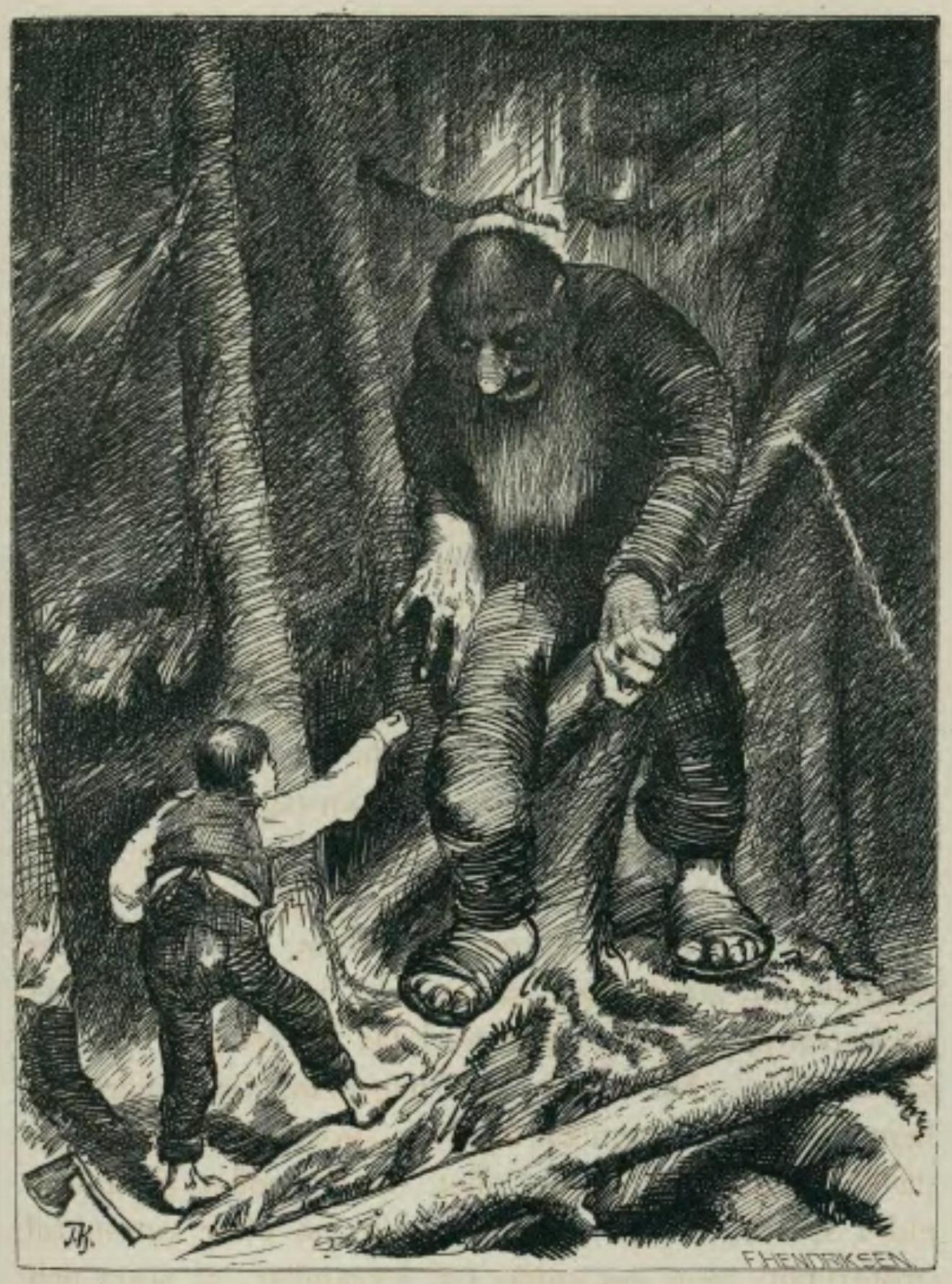
Now, there’s nothing to suggest that the existence of trolls in the folk tradition implies a belief in actual, fleshly creatures with cascades of gold hidden deep within the mountains, as in the fairytales. These creatures belonged purely to the imagination, and had more or less a pure entertainment feature, which perhaps is best pinpointed in the descriptions of their appearance; awfully ugly they are, often with only one eye, covered with hair and with grotesquely large noses.

Meanwhile, tales and legends tell us that the troll is in a continual battle with humans and all the great powers of the world, a battle that should also be interpreted as a symbolic such between man and nature - the dangers one might have to face, if daring to move from the safe infields and out into the unpredictable outlying areas where the subterraneans subsided. By linking dangerous spirits to the wilderness, these legends as well as the folktales communicate a quite gloomy perception of Mother Nature, and refer to it often in relation to darkness, fear, loneliness, storms, hardships and enormous distances. In turn, stories about trolls (also referred to as jotun or jutul) originated as explanations of natural phenomena’s that bore witness of tremendous power and strength; legends about giant canyons and rocks, deep valleys and narrow gorges might in this sense be interpreted as primitive myths of creation. A legend from Telemark explains that

On Håkåneset – the mountain at Tinnsjø, stood a jutul, peering over to Nummedal, hoping to get across. But not matter how he tried to make his way forth, he always seemed to stumble, and he slipped on his heel down the vertical rock wall. Today, a furrow in the mountain appears from top to bottom, telling the tale of the giants’ clumsiness.
Also around Dovrefjell - a mountain range in central Norway -, a number of stories have existed and been told, referring to the mountain as the home of the jutuls. Even King Harald Fairhair – the first king of Norway – had, according to the legends, grown up in these wild mountain tracts, and been fostered by a giant. Also stories associated with Jutulporten (eng. “the giants’ gate”) in Vågå and Jutulhogget (eng. “the giants’ chop”) in Rendalen, bear proof of a vivid understanding of the powerful forces which had been at work, exceeding any human force, or any known natural law. Trolls can thus be understood as a generic term for all kinds of beings and phenomenons threatening human existence.


Jutulhogget in Rendalen: two giants came in argument over the right to use a river nearby. One of them tossed his ax against the other, and hit him right in the skull as he fell dead. Hence, “the giants’ chop”. Photo by Cato Edvardsen (June 2011)

Already among the Norsemen there were notions of such knowledge: according to the Poetic Edda, giants, or jötnar, descended from the ancient creature Ymir, which was killed by Odin and his two brothers. The beings live in Jotunheim (eng. the home of the jotnar), which lies far to the east or north, separated from the dwellings of the gods in Asgard by the river Ífing, which never freezes. They are depicted as monstrous beings, often bulky and ugly, although some of their women can be very attractive, such as the fair Gerd, who makes the god Frey sick of longing for her. 

Gerd and Frey, wooden freeze by Dagfin Werenskiold (1892-1977), in the courtyard of Oslo City Hall. Photo by Camilla Christensen, June 2016

Many giants are also in possession of great wisdom, such as Vavtrudne (Vafþrúðnir), who battles non other than Odin himself, in finding out which is most clever. It is however the battle between the giants and Thor, their most dangerous opponent among the Aesir, which is a main subject in the Norse myths. "The mountain troll roared, thundering in the mountains, the entire ancient earth was shaking," we are told in Hymeskvadet (eng. Hymir's poem). “Waking up the trolls" was therefore considered a major crime in the oldest Norwegian laws. 

Tor's Fight with the Giants (1872), depicted by Swedish artist Mårten Eskil Winge (1825-1896)

The trolls we meet in legends, fairy tales and folk songs actually have a lot in common with these mythological giants, who lived in enmity with gods and humans. But while the fairytale trolls live in what the French folklorist Virginie Amilien has described as "the other world" – the fairytale world, East of the Sun and West of the Moon - these giants inhabited the realm of men; far away, but still within our borders. For ages, these creatures have been a part of Norwegian folklore, and in the sagas, the troll is a dangerous and frightening antagonist with magical powers. It can only be defeated by Christian truth, after which it will return to the mountains – traditionally pictured as a leader of the Christianization of Norway, King Olaf II Haraldsson (also known as St. Olaf), is widely portrayed as a trollslayer. Many churches were built in his name, churches the trolls tried to destroy by throwing rocks at them. It proved, however, that Olaf was a force to be reckoned with, and threw the rocks in return. As a result, many local legends tell stories about mysterious holes in the landscape, bearing witness of the combat. Such stories tell us that it previously was a connection between the trolls, humans and gods. Olaf, in this sense, emerges almost like a personified force of nature, as with the trolls he's fighting against.

In the long run however, the implementation of Christianity had a strong influence on the ancient Norse conceptions of the trolls. In early Christian sources, the troll is associated with the devil, the main enemy, but later iconographic representations give them a quite different and less frightening look. Disparagement was thus one of the main ways that the Christians used to devaluate the value of the elderly and pagan beliefs. Although retaining their status as man’s antagonist, the troll was robbed of much of its former authority. While their ancestors in the ancient saga writings was characterized as powerful beings to be reckoned with, the fairytale trolls were driven farther and farther away from the human sphere. The dangerous and powerful mountain troll that is depicted in the Poetic Edda, was to a great extent weakened and portrayed more as harmless and low-brow beings, made easy to fool by heroes such as the Ashlad


"If you do not keep quiet," he shouted to the troll, 
“then I'll squeeze you like I squeeze the water out of this white stone!"
Illustration by Theodor Kittelsen

In a fairytale called The Gold Bird, a bird of gold steals apples from the king's garden, and loses a feather during the misdeed. The King's youngest son travels out to find the villain, and bring back the apples. On his journey he meets a fox who helps him through the trials he is exposed to along the way – among these are three irate trolls. In the illustration of this fairytale, artist Theodor Kittelsen chose to portray a highlight in the text that tells of the meeting between the trolls and our hero – in this case, when the fox helps the prince out of a troublesome predicament. He has in fact something that belongs to the trolls, and so the fox disguises himself to mislead them:

"Have you seen someone passing by with a beautiful, young maiden, a horse with golden bridle, a golden bird, and a gilded linden tree?" they shouted.
"Yes, I have heard from my grandmother's grandmother that such a journey has taken place; but it was in the good old days, when my grandmother's grandmother baked penny pies and took two for a penny."
Then all the trolls laughed with their mouths wide open. "Ha, ha, ha, ha! If we have we slept that long, we might as well go back to bed," they said, and then they turned and went back the same way they came from.
And how does a troll actually laugh? Little information is communicated through the fairytale, if any. We know that they “squirt fire" when they are angry, that they are burly and crude, large, violent and ugly. Kittelsen therefore believed that their laughter had to be likewise; although the inspiration for the illustration was based on the fairy tales and folk belief, there was also room for a great deal of his own personal imagination. Thus, Kittelsen had to make several revisions along the way, as the first drafts were characterized by a more gruesome approach. At the request of publisher Peter Christen Asbjørnsen – who believed that the children would be frightened – the terrifying trolls from the first drafts were toned down. Instead, they were to a greater extent depicted as more harmless and humanlike beings; the laughter became in this sense a way to defuse the trolls. 


 Theodor Kittelsen; illustration for The Gold Bird (1883). Do you see the difference? The original to the right; Kittelsen changed the mouth of the middle troll and concealed their grisly feet in the grass. The one-eyed ogre was got more “normal” features, and fox is of a considerable larger size.

This illustration is a good example of the more modern “tell tale” tradition, depicting trolls as dangerous, but rather dumb, fully possible to overcome with the use of wits and common sense. Although they have passed on the old notions of multifaceted, ghoulish creatures which could not stand the light of day, the actual fear of them was increasingly diminishing as their domain to a greater extent were confined to fantasy and fiction, hence losing its grounding in the popular folk belief.

Nevertheless, it is tempting to say that through the legends, we still have the possibility to understand the former primal force of the Norse giants - the implacable opponents of Odin, Thor and the other aesir. The remarkable rock formations that are often found in places where nature is particularly unbridled have often acquired their names reminiscent of the temperament of the trolls; for people passing through, these names were a reminder that they were in a wild and dangerous landscape, demanding vigilance and caution. In this perspective, essence of the trolls remained close at hand to make the journey unsafe, bearing witness of their original authority. Trolls in mythology, fairy tales and legends can therefore be regarded as evidence of our ancestors’ vivid encounters with Mother Nature –perhaps as products of the imagination, but nonetheless an indicator of a long lost reality and truth.


He shook the earth to its' very core. 
Painting, oil on canvas. Theodor Kittelsen (1900)


Sources:
  • Amilien, Virginie. "Troll and other Supernatural Creatures in Norwegian Folktales". I Norveg – tidsskrift for folkloristikk. Årgang 39. Nr. 1. 1996. 
  • Amilien, Virginie. "Den annen verden i norske folkeeventyr". I Nord-Nytt – nordisk tidsskrift for folkelivsforskning. Nr. 65. 1996
  • Bø, Olav og Hodne, Ørnulf. Norsk natur i folketru og segn. Det norske samlaget. Oslo 1974. 
  • Bø, Olav. Trollmakter og godvette. Det norske samlaget. Oslo 1987. 
  • Christensen, Camilla. Og skogen gav os eventyret: møter mellom ånd, natur og folketro i Theodor Kittelsens kunst. Masteroppgave ved Universitetet i Oslo, 2011. URL: https://www.duo.uio.no/bitstream/handle/10852/24298/Master.xCamilla.xNyttxdokument..pdf?sequence=4   
  • Edda-dikt. Oversatt av Ludvig Holm-Olsen. J.W. Cappelens Forlag. 2. reviderte opplag. 1993.
  • Hodne, Ørnulf. Det gåtefulle Norge. Mystiske steder. Sagn. Folketro. J.W. Cappelens Forlag A.S. 2004 
  • Hodne, Ørnulf. Vetter og skrømt i norsk folketro. J.W. Cappelens Forlag. 1995
  • Hodne, Ørnulf. Det norske folkeeventyret. Fra folkediktning til nasjonalkultur. J.W. Cappelens Forlag A.S. 1998
  • Koefoed, Holger; Økland, Einar. Th. Kittelsen. Kjente og ukjente sider ved kunstneren. J.M. Stenersens Forlag A.S. 1999. 
  • Landstad, M.B. Mytiske sagn fra Telemarken. Efterladte optegnelser. Oslo (Norsk Folkeminnelag) 1926. 
  • Myrvoll, Klaus Johan. "Jotun". (2015, 4. mai). I Store norske leksikon. Hentet 10. mai 2016 fra https://snl.no/jotun
  • Norsk Folkeminnesamling. Gullfuglen. AT550. Samler: P. Chr. Asbjørnsen. Sted: Sel, Oppland. År: 1842